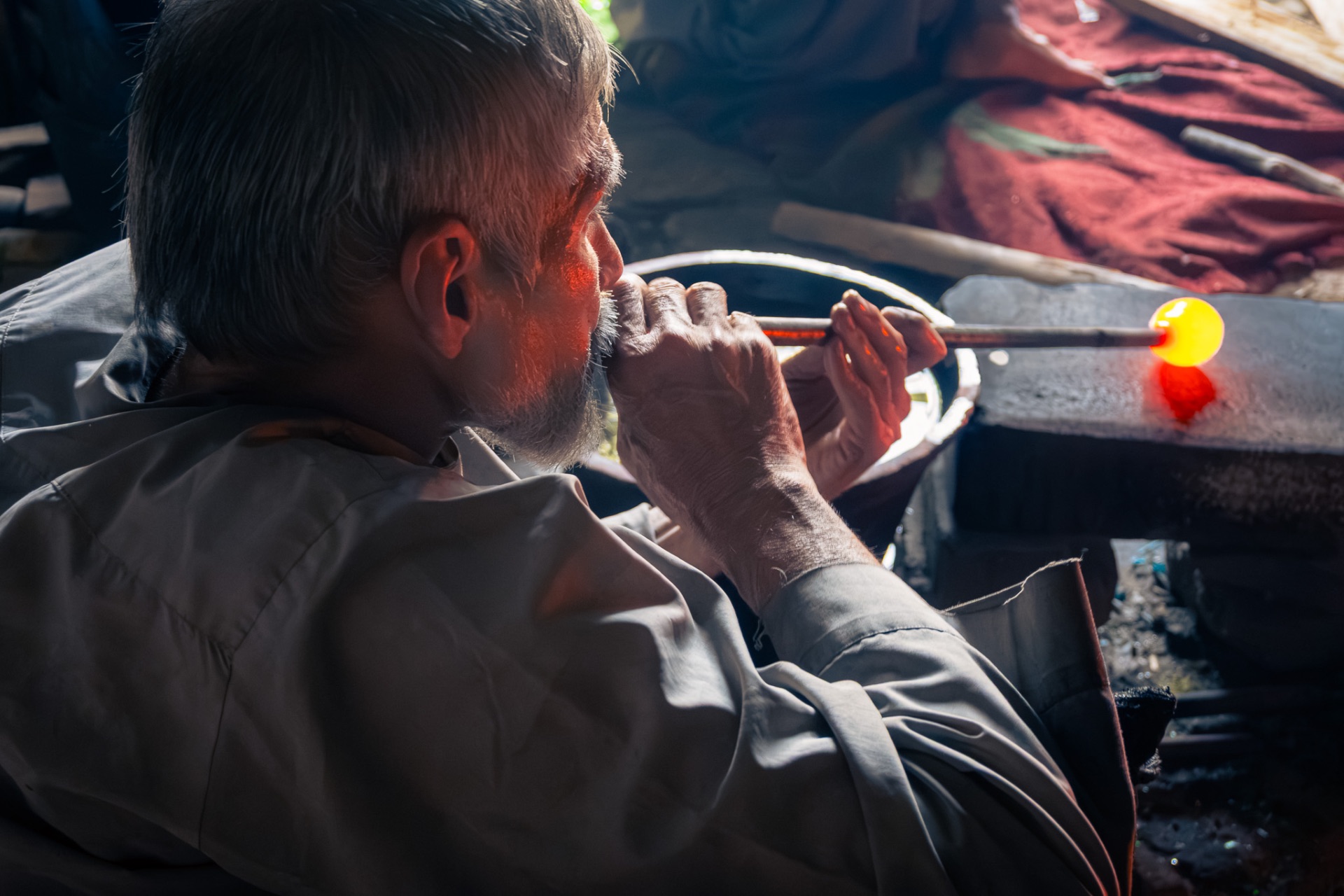
Inside a soot-darkened workshop on the grounds of Herat’s citadel, a craftsman sits beside a furnace. At the end of his metal pipe, a gathering of glass glows orange. He turns it, brings the pipe to his lips and blows. Between his hands, a vessel begins to take shape. His shop is here too: a place to discover the finished objects after watching the work that brings them into being. Alongside the citadel’s towers and courtyards, this small workshop offers another way to encounter Herat—through the skill and concentration of someone making something by hand.
History & Details
Herat’s position on historic trading routes helped make it a centre of artistic exchange. Under the Timurids in the fifteenth century, the city became particularly renowned for its architecture, painting and manuscript arts. Its citadel, also known as Qala-e Ikhtiyaruddin, occupies a site associated with Alexander the Great, although the surviving fortress reflects centuries of rebuilding.
Glassmaking belongs to the city’s wider history of craftsmanship. In 1968, researchers associated with the Corning Museum of Glass visited glassmakers near Herat and documented a family workshop using riverbed pebbles and plant ash to make glass. Further research and filming in 1977 recorded the knowledge, furnaces and hand tools behind the work.
The craft is especially compelling when seen at close quarters. A blowpipe, a furnace and a few tools may appear simple, but controlling the glass requires judgement: when to turn it, when to shape it, when to return it to the heat. The finished vessel holds the traces of those decisions.
Gallery
Visitor Experience
“A visit rewards patience. Stay long enough to follow a piece through several stages: the orange glow as it leaves the furnace, the turning of the pipe, the brief breath and the careful movement of tools against the glass. Watch the hands as closely as the object. The workshop offers a striking change of scale after exploring the citadel. Outside, towers and walls tell the history of a city. Here, attention settles on a face, a gesture and a fragile form emerging from heat. In the adjoining shop, take time to look at the finished glassware. After seeing the process, a rim, a curve or a variation in colour becomes something you understand differently. If you choose to buy a piece, purchasing directly makes the connection between object and maker tangible. With Ariana, this encounter can form part of a wider exploration of Herat’s architecture, bazaars and artisan traditions. Workshop access and opportunities to see glassmaking depend on the craftsman’s working schedule and whether the furnace is operating. We confirm arrangements locally and ask permission before photographing people at work.”


Don't see a trip that fits? We can build one entirely around the places you want to see.
Plan a Custom Visit