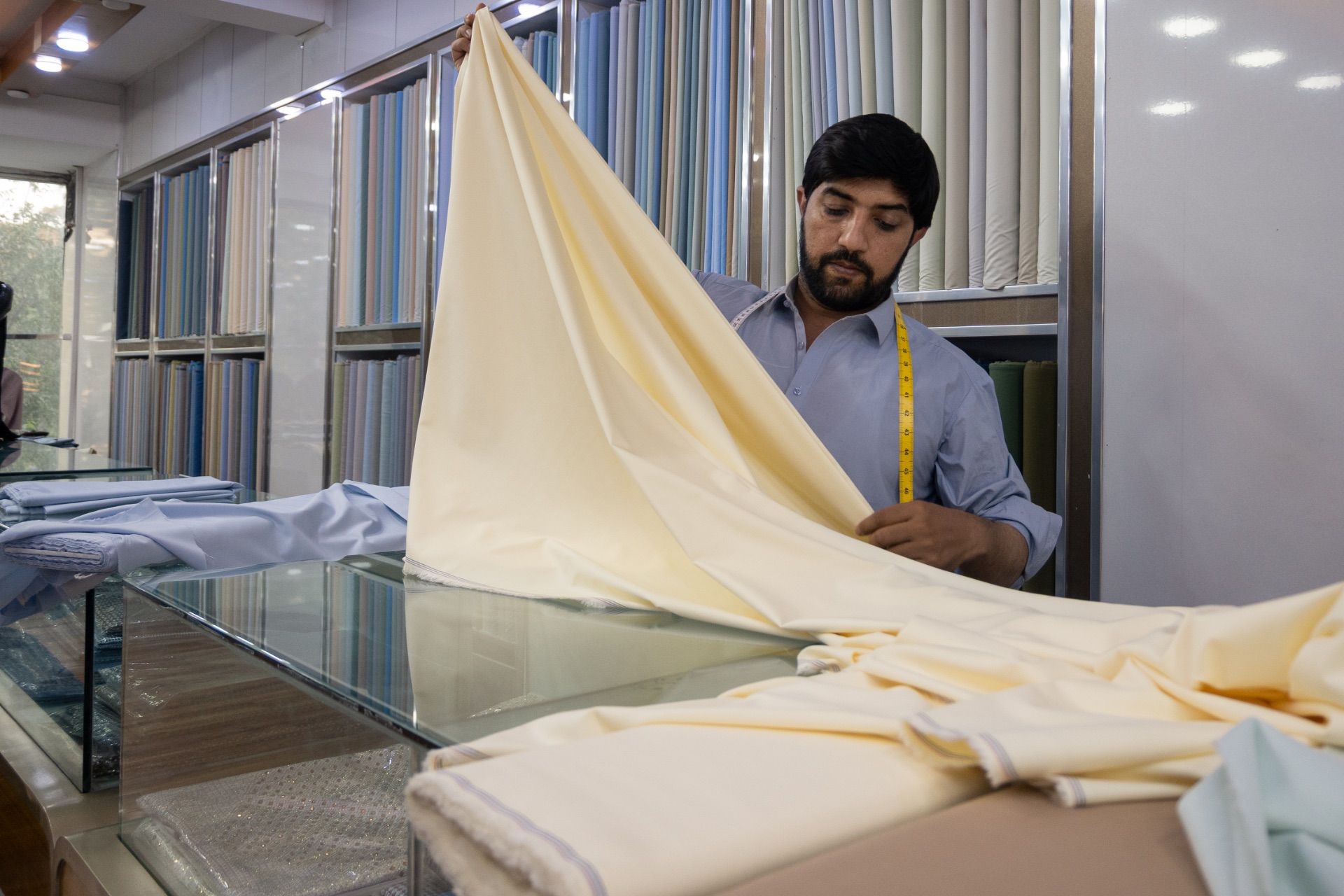
Before a journey begins, there is often a small decision about what to wear. In Afghanistan, that may mean visiting a tailor shop, feeling the weight of a cloth between your fingers, and imagining how it will fall once a tailor has made it your own. The perahan tunban is a familiar part of Afghan men’s dress. Its loose shirt and trousers can look understated from a distance. Up close, the choices become visible: the fabric, the length, the collar, the stitching, the way the garment moves with its wearer.
History & Details
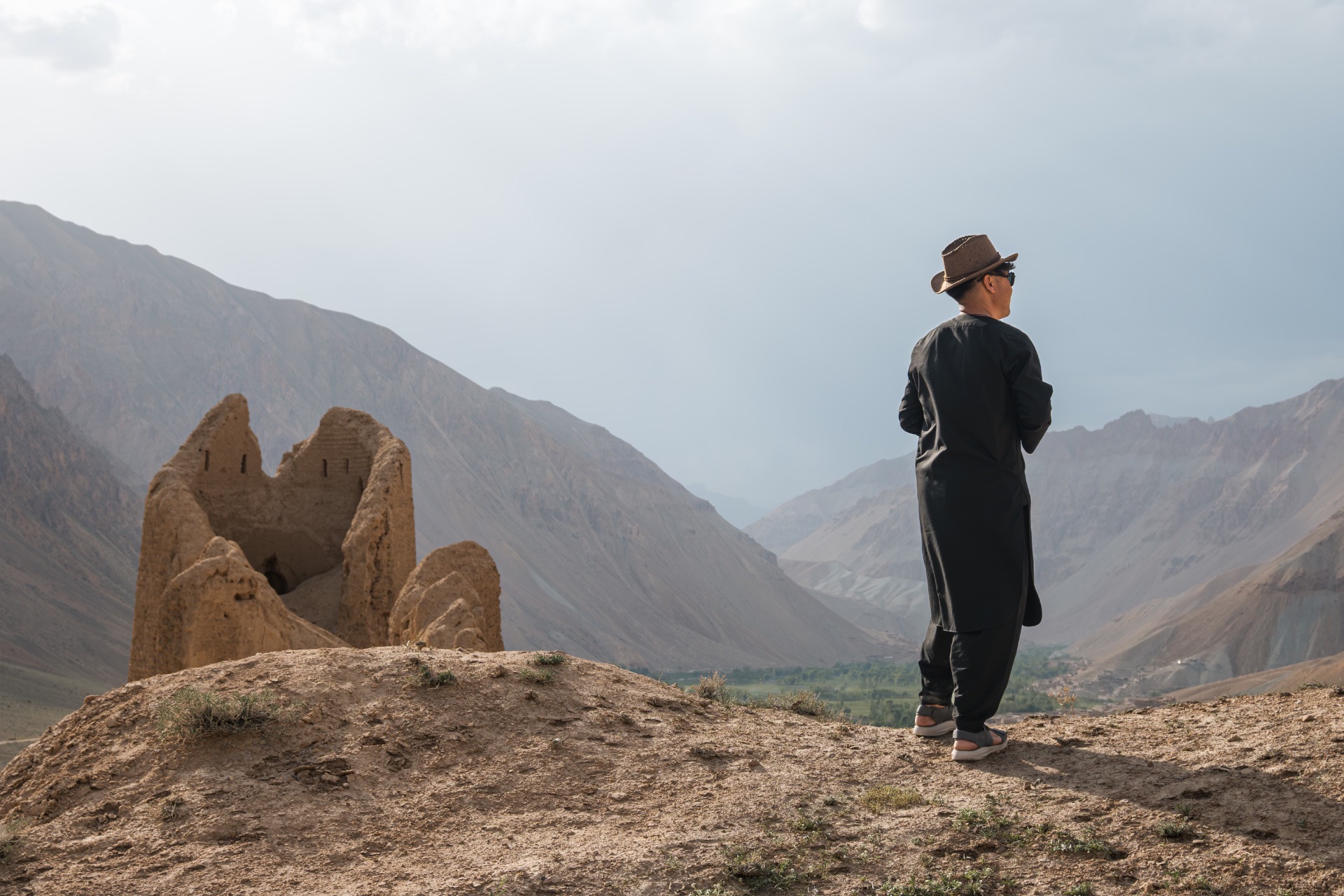
The perahan tunban belongs to a much older tradition of wearing a loose shirt over trousers, shared across Afghanistan and neighbouring regions. It has no single origin story or fixed design. Afghan communities have shaped it in different ways over generations: the shirt may fall to the knee or lower, while its cut, fabric, collar, and decoration reflect local styles and individual taste.
Some details have become especially admired, such as the embroidered fronts of shirts made in Kandahar. A waistcoat or a warmer outer garment may be worn over the perahan. During the twentieth century, Western-style clothing became common in Afghan cities, but the perahan tunban continued to be worn, adapted, and made anew. Its history is visible in that continuity as much as in any old photograph.
Watch
Gallery
Visitor Experience
“A tailor shop is a place to notice how this clothing takes shape today. Rolls of cloth stand along the walls; a shopkeeper unfolds one across the counter; a customer tests its texture with a hand. The conversation may move from colour to measurements, from an everyday garment to something made for an occasion. Take time to watch the process. The perahan tunban is part of Afghanistan’s history, but here it is also something immediate and personal: cloth being chosen for the life of the person who will wear it. Special thanks to Chelsea Store, Kabul”
Don't see a trip that fits? We can build one entirely around the places you want to see.
Plan a Custom Visit